Storia Di Un Patriotta Upton Sinclair Avanti 1921 Prima Edizione
Valore stimato —€139.3
Descrizione
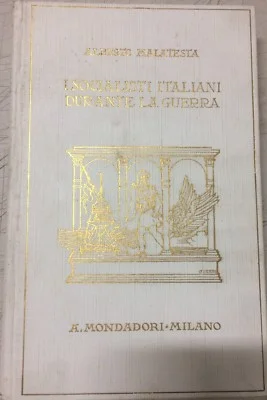
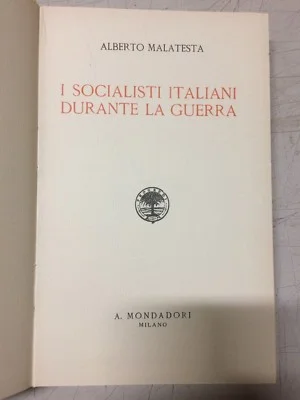
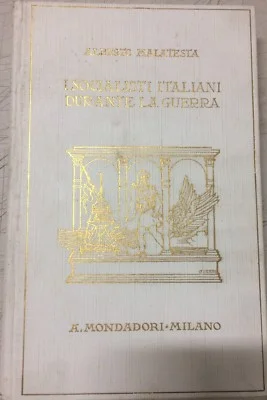
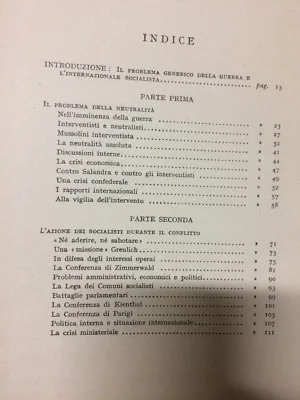
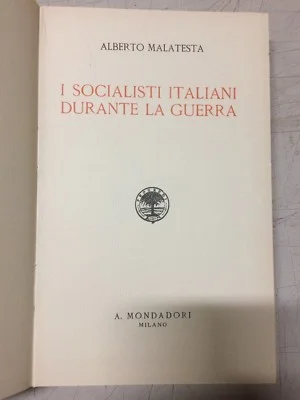
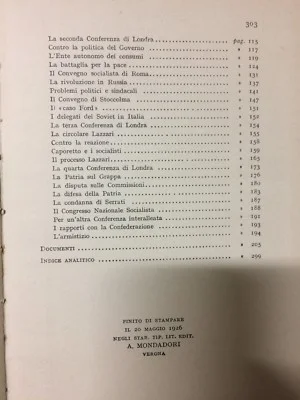
Upton Sinclair 100 % *Storia di un patriotta* Milano, Soc. Editrice L'Avanti!, 1921 Cm.20, pp.368, bross. edit. (difetti) Interessante edizione antica e d'epoca, volume impresso a cura del periodico socialista L'Avanti!, con trattazione nella traduzione italiana di A. Caroti, nella quale la narrazione si intreccia probabilmente anche con la politica. Di interesse culturale, letterario, politico, bibliografico Discreta conservazione generale, segni e difetti d'uso o d'epoca, sparse fioriture e sgualciture e difetti vari marginali, legatura un pò allentata, difetti alle copertine con strappetti marginali; bella stampa figurata al verso delle copertine, con più volte ripetuto il simbolo editoriale dell'editrice L'Avanti". *(le immagini allegate raffigurano alcuni particolari dell'intero volume, eventuali ulteriori informazioni a richiesta)* ####### ***Upton Beall Sinclair Jr.** (*[*September 20*](https://en.wikipedia.org/wiki/September_20 "September 20")*,* [*1878*](https://en.wikipedia.org/wiki/1878 "1878") *–* [*November 25*](https://en.wikipedia.org/wiki/November_25 "November 25")*,* [*1968*](https://en.wikipedia.org/wiki/1968 "1968")*) , one of the best investigative journalists of his era, was a prolific* [*American*](https://en.wikipedia.org/wiki/United_States "United States") *author who wrote over 90 books in many genres, often advocating* [*socialist*](https://en.wikipedia.org/wiki/Socialism "Socialism") *views, and achieved considerable popularity in the first half of the* [*Twentieth Century*](https://en.wikipedia.org/wiki/20th_century "20th century")*. He gained particular fame for his novel,* [*The Jungle*](https://en.wikipedia.org/wiki/The_Jungle "The Jungle") *(1906), which dealt with conditions in the U.S. meat packing industry and caused a public uproar that partly contributed to the passage of the* [*Pure Food and Drug Act*](https://en.wikipedia.org/wiki/Pure_Food_and_Drug_Act "Pure Food and Drug Act") *in 1906.* *However, he believed that the main point of The Jungle was lost on the public, overshadowed by his descriptions of unsanitary conditions in the packing plants. The public health concerns dealt with in The Jungle are actually far less significant than the human tragedy lived by his main character and other workers in the plants. His main goal for the book was to demonstrate the inhumane conditions of the wage earner under capitalism, not to inspire public health reforms in how the packing was done. Indeed, Sinclair lamented the effect of his book and the public uproar that resulted: "I aimed at the public's heart, and by accident I hit it in the stomach." Still, the fame and fortune he gained from publishing The Jungle enabled him to write books on almost every issue of social injustice in the Twentieth Century.* *Upton Sinclair was born on September 20th, 1878 in* [*Baltimore, Maryland*](https://en.wikipedia.org/wiki/Baltimore%2C_Maryland "Baltimore, Maryland") *and later moved to* [*New York City*](https://en.wikipedia.org/wiki/New_York_City "New York City")*, but later lived much of his life in* [*Pasadena, California*](https://en.wikipedia.org/wiki/Pasadena%2C_California "Pasadena, California") *and later in* [*Buckeye, Arizona*](https://en.wikipedia.org/wiki/Buckeye%2C_Arizona "Buckeye, Arizona")*. Near the end of his life he moved to* [*Bound Brook, New Jersey*](https://en.wikipedia.org/wiki/Bound_Brook%2C_New_Jersey "Bound Brook, New Jersey")*.* *Sinclair established a socialist commune called Helicon Hall Colony in 1906 with proceeds from his novel* [*The Jungle*](https://en.wikipedia.org/wiki/The_Jungle "The Jungle")*. One of those who joined was the novelist and playwright* [*Sinclair Lewis*](https://en.wikipedia.org/wiki/Sinclair_Lewis "Sinclair Lewis")*, who worked there as a janitor. The colony burned down in 1907, apparently from arson.* *Sinclair faced what he would later call "the most difficult ethical problem of my life," when he was told in confidence by* [*Sacco and Vanzetti*](https://en.wikipedia.org/wiki/Sacco_and_Vanzetti "Sacco and Vanzetti")*'s former attorney Fred Moore that they were guilty and how their alibis were supposedly arranged*[*\[1\]*](https://www.cbc.ca/story/arts/national/2006/01/28/uptonsinclair-boston.html "https://www.cbc.ca/story/arts/national/2006/01/28/uptonsinclair-boston.html")*. However, in the letter revealing that discussion with Moore, Sinclair also wrote, "I had heard that he \[Moore\] was using drugs. I knew that he had parted from the defense committee after the bitterest of quarrels … Moore admitted to me that the men themselves had never admitted their guilt to him." Although this episode has been used by some to claim that Sacco and Vanzetti were guilty and that Sinclair knew that when he wrote his novel* [*Boston*](https://en.wikipedia.org/wiki/Boston "Boston")*, this account has been disputed by Sinclair biographer Greg Mitchell.* *Sinclair was married three times.* *He took an interest in psychic phenomena and experimented with telepathy, writing a book titled Mental Radio, published in 1930.* *His papers, photographs, and first editions of most of his books are found at the Lilly Library, Indiana University, Bloomington, Indiana.* ## *\[*[*edit*](https://en.wikipedia.org/w/index.php?title=Upton_Sinclair&action=edit§ion=2 "Edit section: Political and social activism")*\]* *Political and social activism* *Sinclair made several bids for national office. In 1906, the* [*Socialist Party*](https://en.wikipedia.org/wiki/Socialist_Party "Socialist Party") *sponsored his candidacy for Congress in New Jersey. He lost with just over 3% of the votes.*[*\[2\]*](https://www.spartacus.schoolnet.co.uk/Jupton.htm "https://www.spartacus.schoolnet.co.uk/Jupton.htm")[*\[3\]*](https://www.capitalcentury.com/1906.html "https://www.capitalcentury.com/1906.html") *After moving to California in 1915, Sinclair went on to run unsuccessfully for Congress twice on the Socialist ticket: in 1920 for the House of Representatives, and in 1922 for the Senate.*[*\[4\]*](https://www.sfmuseum.org/hist1/sinclair.html "https://www.sfmuseum.org/hist1/sinclair.html") *In 1934 Sinclair made his most successful run for office, this time as a Democrat. Sinclair's platform for the California gubernatorial race of 1934, known as* [*Epic*](https://en.wikipedia.org/wiki/EPIC_Movement "EPIC Movement") *(End Poverty in California), galvanized the support of the Democratic Party, and Sinclair gained its nomination.* [*Conservatives*](https://en.wikipedia.org/wiki/Conservatism "Conservatism") *in California were themselves galvanized by this, as they saw it as an attempted* [*Communist*](https://en.wikipedia.org/wiki/Communist "Communist") *takeover of their state and used massive political propaganda portraying Sinclair as a Communist, even as he was being portrayed by American and Soviet Communists as a* [*capitalist*](https://en.wikipedia.org/wiki/Capitalist "Capitalist") *following the* [*Que Viva Mexico!*](https://en.wikipedia.org/wiki/Sergei_Eisenstein#Que_Viva_Mexico.21 "Sergei Eisenstein") *debacle.* [*Robert A. Heinlein*](https://en.wikipedia.org/wiki/Robert_A._Heinlein "Robert A. Heinlein")*, the* [*science fiction*](https://en.wikipedia.org/wiki/Science_fiction "Science fiction") *author, was deeply involved in Sinclair's campaign, a point which Heinlein tried to obscure from later biographies, after Heinlein's political views shifted sharply to the right.\[[citation needed](https://en.wikipedia.org/wiki/Wikipedia:Citing_sources "Wikipedia:Citing sources")\]* *Sinclair was defeated by* [*Frank F. Merriam*](https://en.wikipedia.org/wiki/Frank_F._Merriam "Frank F. Merriam") *in the election and largely abandoned Epic \[[citation needed](https://en.wikipedia.org/wiki/Wikipedia:Citing_sources "Wikipedia:Citing sources")\] and politics to return to writing. However, the race of 1934 would become known as the first race to use modern campaign techniques like motion pictures.* *Of his gubernatorial bids, Sinclair remarked in 1951: "The American People will take Socialism, but they won't take the label. I certainly proved it in the case of Epic. Running on the Socialist ticket I got 60,000 votes, and running on the slogan to 'End Poverty in California' I got 879,000. I think we simply have to recognize the fact that our enemies have succeeded in spreading the Big Lie. There is no use attacking it by a front attack, it is much better to out-flank them."* *An early success was the Civil War novel* [*Manassas*](https://en.wikipedia.org/wiki/Manassas "Manassas")*, written in 1903 and published a year later. Originally projected as the opening book of a trilogy, the success of* [*The Jungle*](https://en.wikipedia.org/wiki/The_Jungle "The Jungle") *caused him to drop such plans, although he did revise Manassas decades later by "moderating some of the exuberance of the earlier version"; a description — in Sinclair's case — very much of a relative kind.* [*The Jungle*](https://en.wikipedia.org/wiki/The_Jungle "The Jungle") *brought to light many major issues in America such as poverty and other social wrongs. It is rumored that Sinclair was a racist\[[citation needed](https://en.wikipedia.org/wiki/Wikipedia:Citing_sources "Wikipedia:Citing sources")\], and there is some foundation for this\[[citation needed](https://en.wikipedia.org/wiki/Wikipedia:Citing_sources "Wikipedia:Citing sources")\]. Upton Sinclair grew up in the* [*Nineteenth Century*](https://en.wikipedia.org/wiki/Nineteenth_Century "Nineteenth Century")*, where epithets were used to refer to people of certain ethnic backgrounds (see* [*racial epithets*](https://en.wikipedia.org/wiki/Racial_epithet "Racial epithet")*). In his books, he used these to realistically portray the way in which foreigners and minorities were referred to and treated. For example, in his book Oil!, one character uses a disparaging word to refer to non-Jewish people and a different character uses a disparaging word to refer to Jewish people. Some argue that no offense is intended or implied and that the books were written to accurately reflect the way people thought during the time. However in other books, Sinclair goes well beyond the simple use of racial epithets in quotes. For example in The Jungle, it is the narrator who describes* [*African Americans*](https://en.wikipedia.org/wiki/African_Americans "African Americans") *in a highly negative light. To some, this description is meant merely to capture the mindset of the* [*Eastern European*](https://en.wikipedia.org/wiki/Eastern_European "Eastern European") *immigrants who are the book's protagonists (a group which was itself held in low regard in America at the time). To others, the descriptions reflected what was possibly Sinclair's own racist views. Although some might argue that at the time The Jungle was published, the epithets against blacks were unnoticed by both his supporters and detractors\[[citation needed](https://en.wikipedia.org/wiki/Wikipedia:Citing_sources "Wikipedia:Citing sources")\], likely these were his white supporters, as African American readers would have been offended by the epithets in a post-*[*Plessy v. Ferguson*](https://en.wikipedia.org/wiki/Plessy_v._Ferguson "Plessy v. Ferguson")*, dawning-of-the-Jim-Crow-Era period\[[citation needed](https://en.wikipedia.org/wiki/Wikipedia:Citing_sources "Wikipedia:Citing sources")\]. It is considered erroneous to assume that if the majority classes expressed no offense at Sinclair's views, they were not offensive to his black contemporaries who had no platform on which to express their umbrage with Sinclair's portrayals of them. Nevertheless, The Jungle's impact was far-reaching.* *Sinclair helped found the California chapter of the* [*American Civil Liberties Union*](https://en.wikipedia.org/wiki/American_Civil_Liberties_Union "American Civil Liberties Union") *in the 1920s.* *Sinclair is well-known for his principle: "It is difficult to get a man to understand something when his salary depends on his not understanding it." which has been quoted in many political books, essays, articles, and other forms of media, including* [*Al Gore*](https://en.wikipedia.org/wiki/Al_Gore "Al Gore")*'s 2006 film,* [*An Inconvenient Truth*](https://en.wikipedia.org/wiki/An_Inconvenient_Truth "An Inconvenient Truth")*.* *He was also firmly in favor of* [*prohibition*](https://en.wikipedia.org/wiki/Prohibition "Prohibition")*, most obviously in his novel* [*The Wet Parade*](https://en.wikipedia.org/wiki/The_Wet_Parade "The Wet Parade")*, which tells the story of a prohibition agent from a pro-Dry slant.* ## *\[*[*edit*](https://en.wikipedia.org/w/index.php?title=Upton_Sinclair&action=edit§ion=3 "Edit section: The Lanny Budd series")*\]* *The Lanny Budd series* *Between 1940 and 1953 Sinclair wrote 11 novels about an American named Lanny Budd that, read in sequence, detailed much of the political history of the Western world in the first half of the twentieth century. Almost totally forgotten today, they were all* [*bestsellers*](https://en.wikipedia.org/wiki/Bestseller "Bestseller") *upon publication and were published in 21 countries. The third book in the series,* [*Dragon's Teeth*](https://en.wikipedia.org/wiki/Dragon%27s_Teeth_%28novel%29 "Dragon's Teeth (novel)")*, won the* [*Pulitzer Prize*](https://en.wikipedia.org/wiki/Pulitzer_Prize "Pulitzer Prize") *in 1943.* *Long out of print, the Lanny Budd series have recently been re-issued by Simon Publications. For technical reasons, each original volume is issued in two parts, forming a 22-volume set.* ## *\[*[*edit*](https://en.wikipedia.org/w/index.php?title=Upton_Sinclair&action=edit§ion=4 "Edit section: Sinclair in culture")*\]* *Sinclair in culture* *In* [*Sinclair Lewis*](https://en.wikipedia.org/wiki/Sinclair_Lewis "Sinclair Lewis")*' novel* [*It Can't Happen Here*](https://en.wikipedia.org/wiki/It_Can%27t_Happen_Here "It Can't Happen Here")*, Sinclair is depicted as an* [*eccentric*](https://en.wikipedia.org/wiki/Eccentricity_%28behaviour%29 "Eccentricity (behaviour)") *and a supporter of* [*fascism*](https://en.wikipedia.org/wiki/Fascism "Fascism") *out of opportunistic